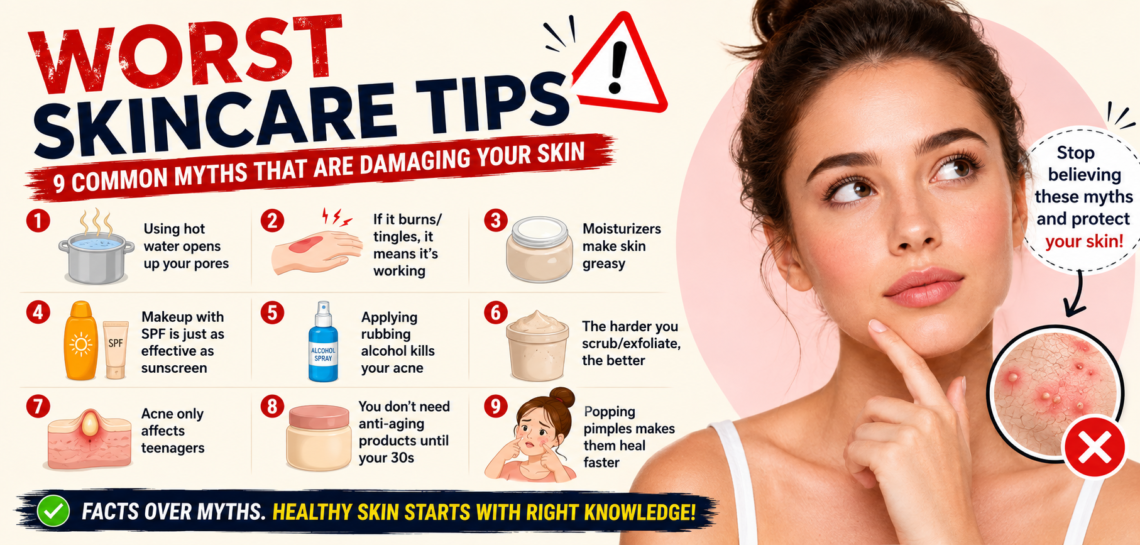
9 Worst Skincare Tips: Healthy, glowing skin isn’t about following every skincare trend you see online. Unfortunately, social media and outdated beauty advice have spread many skincare myths that can actually do more harm than good. Believing these misconceptions may lead to irritation, breakouts, dryness, premature aging, or long-term skin damage.
In this guide, we’ll debunk the worst skincare tips that people still believe and explain what you should do instead. Whether you’re a beginner or already have a skincare routine, understanding the science behind healthy skin can help you make smarter choices.
1. Hot Water Opens Your Pores
One of the biggest skincare myths is that washing your face with hot water “opens” your pores.
The truth is that pores do not have muscles, so they cannot open or close. Hot water simply softens oil and dirt, making cleansing easier. However, excessively hot water strips away your skin’s natural oils, leading to dryness, irritation, and a weakened skin barrier.
What to do instead:
- Wash your face with lukewarm water.
- Use a gentle cleanser suitable for your skin type.
- Finish with a moisturizer to lock in hydration.
2. If It Burns or Tingles, It Means It’s Working
Many people think that a burning sensation means a skincare product is highly effective.
In reality, burning or intense stinging often signals that your skin is becoming irritated. While certain ingredients like retinol or exfoliating acids may cause mild tingling during the adjustment period, strong discomfort is never a good sign.
Better approach:
- Patch-test new products before applying them to your entire face.
- Stop using products that cause burning or redness.
- Choose products formulated for sensitive skin if you’re prone to irritation.
3. Moisturizers Make Skin Greasy
People with oily skin often skip moisturizer because they believe it will make their face even oilier.
The opposite is usually true. When your skin lacks moisture, it may produce more oil to compensate. A lightweight, oil-free moisturizer helps maintain your skin barrier without making your skin greasy.
Best practice:
- Use a gel-based moisturizer for oily skin.
- Use richer creams if your skin is dry.
- Moisturize every day, even if you have acne-prone skin.
4. Makeup with SPF Replaces Sunscreen
Many foundations and BB creams contain SPF, but that doesn’t mean they provide enough sun protection.
Most people don’t apply enough makeup to reach the labeled SPF level. As a result, your skin remains vulnerable to UV damage, dark spots, and premature aging.
Correct method:
- Apply a broad-spectrum sunscreen (SPF 30 or higher) every morning.
- Let it absorb before applying makeup.
- Reapply sunscreen every two hours if you’re outdoors.
5. Rubbing Alcohol Gets Rid of Acne
Using rubbing alcohol on pimples may seem like a quick solution, but it often causes more problems.
Alcohol dries out the skin, damages the protective barrier, and can trigger increased oil production, making acne worse over time.
Safer alternatives include:
- Salicylic acid
- Benzoyl peroxide
- Niacinamide
- Adapalene (for suitable users)
If acne is persistent or severe, consult a dermatologist for personalized treatment.
Also Known:
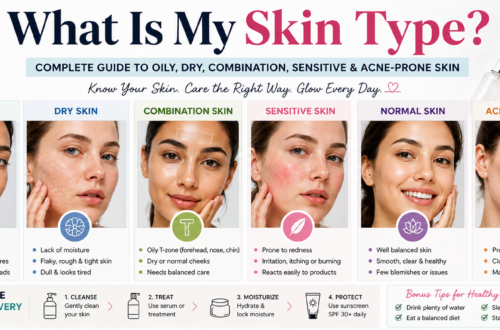
1. Skin Type Guide 2026: How to Care for Oily, Dry, Combination & Sensitive Skin
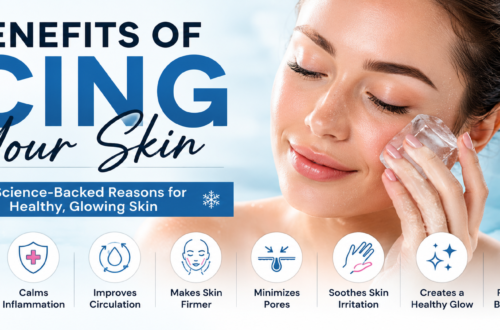
2. Benefits of Icing Your Skin: 8 Science-Backed Reasons for Healthy, Glowing Skin
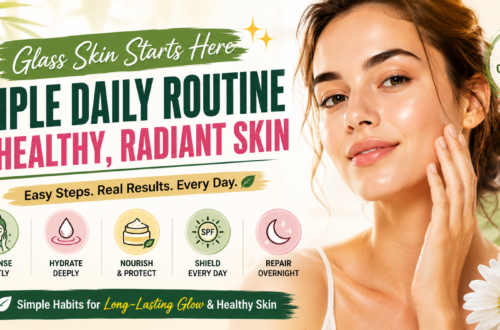
3. Dry Summer Skin? Follow This Simple 3-Day Reset for Softer, Healthier Skin
6. The Harder You Scrub, the Better
Scrubbing your skin aggressively does not make it cleaner.
Over-exfoliation damages the skin barrier, causing redness, sensitivity, peeling, and inflammation. Healthy skin only needs gentle exfoliation.
Healthy exfoliation tips:
- Exfoliate only 1–2 times per week.
- Use gentle chemical exfoliants instead of harsh physical scrubs.
- Always moisturize after exfoliating.
7. Acne Only Affects Teenagers
While acne is common during puberty, adults can develop acne at any age.
Hormonal changes, stress, genetics, medications, skincare products, and lifestyle factors can all contribute to adult acne.
The good news is that adult acne is treatable with the right skincare routine and professional guidance when necessary.
8. You Don’t Need Anti-Aging Products Until Your 30s
Many people believe anti-aging skincare should only begin after visible wrinkles appear.
In reality, prevention works better than correction. You don’t need strong anti-aging treatments in your twenties, but daily habits like sunscreen, moisturizer, antioxidants, and healthy living help protect your skin from early aging.
A simple routine is often enough:
- Cleanser
- Moisturizer
- Sunscreen
- Vitamin C (optional)
- Retinol later if appropriate for your skin
9. Popping Pimples Helps Them Heal Faster
Popping pimples may seem satisfying, but it often pushes bacteria deeper into the skin.
This increases inflammation and raises the risk of infection, scarring, and dark spots that can last for months.
Instead:
- Apply a hydrocolloid pimple patch.
- Use an acne spot treatment.
- Allow the blemish to heal naturally.
Build a Healthy Skincare Routine
Instead of following viral beauty hacks, focus on consistent skincare habits:
- Cleanse your face twice daily with a gentle cleanser.
- Moisturize every day.
- Wear SPF 30 or higher every morning.
- Avoid over-exfoliating.
- Introduce active ingredients slowly.
- Drink enough water and maintain a balanced diet.
- Get sufficient sleep and manage stress.
Consistency always beats complicated routines.
Final Thoughts on 9 Worst Skincare Tips
Healthy skin doesn’t come from harsh treatments or outdated beauty myths. Many popular skincare tips—such as using hot water, skipping moisturizer, or popping pimples—can actually harm your skin over time. By understanding the facts and following evidence-based skincare practices, you can protect your skin barrier, reduce breakouts, and maintain a healthy, natural glow.
Remember that every person’s skin is different. What works for someone else may not work for you. When trying new products, introduce them gradually and pay attention to how your skin responds. If you experience persistent acne, severe irritation, or unusual skin concerns, seeking advice from a qualified dermatologist is the safest approach. A simple, consistent routine built on proven skincare principles is the best investment you can make for healthy skin today and in the future.