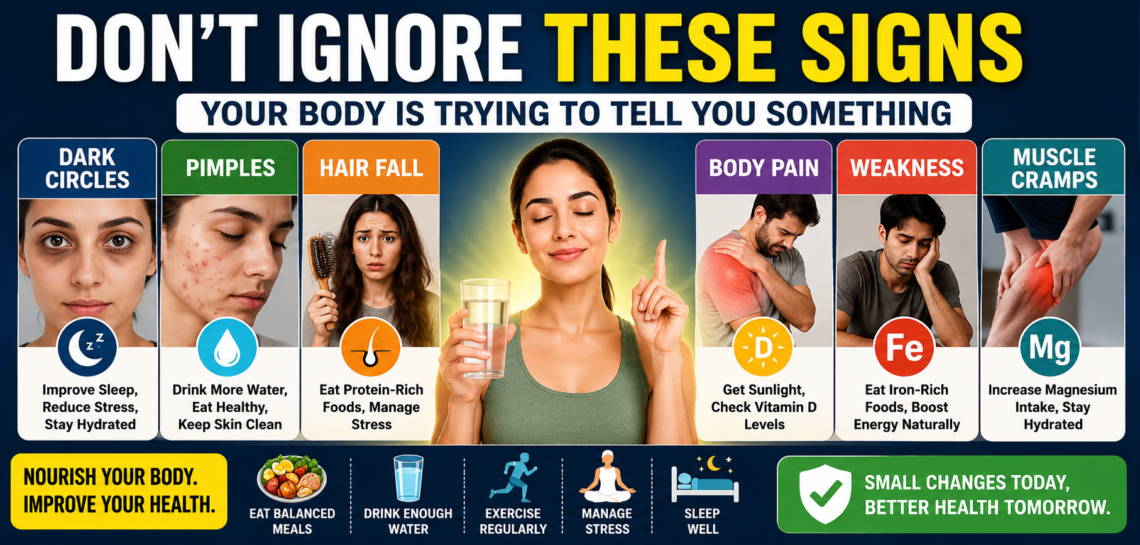
Your body often gives small warning signs before a health problem becomes serious. Dark circles, frequent pimples, hair fall, muscle cramps, and constant tiredness are not always caused by a lack of sleep or stress. In many cases, they may point to poor nutrition, dehydration, vitamin deficiencies, or unhealthy lifestyle habits.
Instead of ignoring these symptoms or relying on quick fixes, it’s important to understand what your body needs. This guide explains some common health warning signs and practical ways to support your overall well-being naturally.
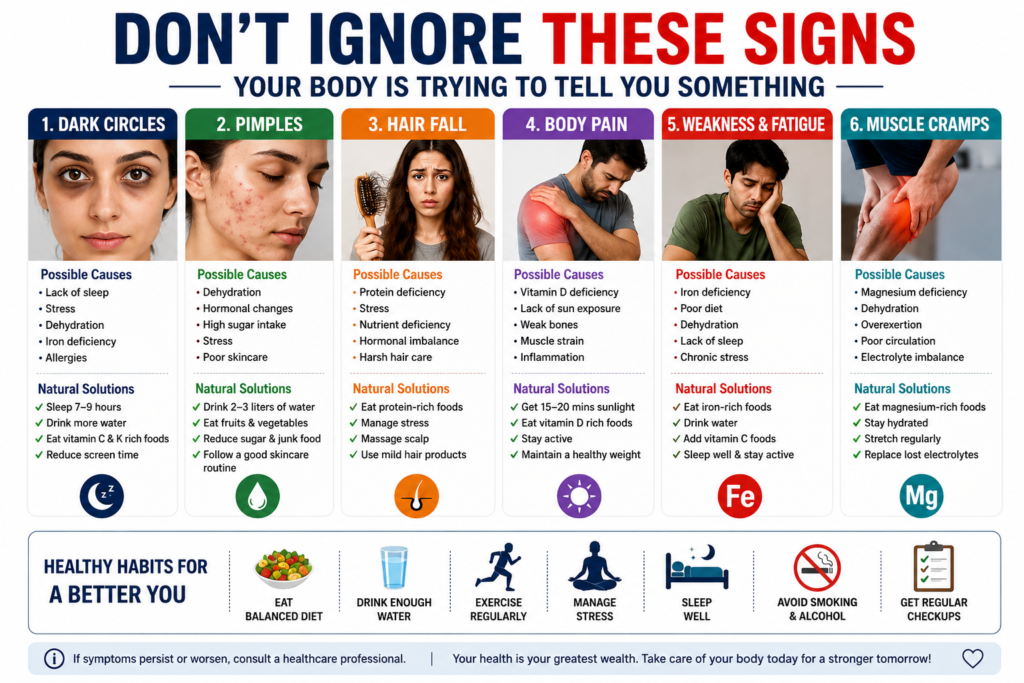
1. Dark Circles: More Than Just Lack of Sleep
Dark circles under the eyes are one of the most common beauty concerns. While genetics and aging can play a role, poor sleep remains one of the biggest contributors.
Common Causes
- Lack of quality sleep
- Stress
- Dehydration
- Excessive screen time
- Allergies
- Iron deficiency (in some cases)
Natural Solutions
- Aim for 7–9 hours of quality sleep every night.
- Drink enough water throughout the day.
- Reduce screen exposure before bedtime.
- Eat foods rich in vitamins C and K.
- Use a cold compress to reduce puffiness.
Good sleep allows your skin to repair itself, making your eyes appear brighter and healthier.
2. Pimples: Hydration and Skin Health
Acne isn’t always caused by oily skin. Poor hydration, unhealthy eating habits, hormonal changes, and stress can all affect your skin.
Common Causes
- Dehydration
- Hormonal fluctuations
- High sugar intake
- Stress
- Poor skincare routine
Natural Solutions
- Drink 2–3 liters of water daily.
- Wash your face with a gentle cleanser twice a day.
- Eat fruits and vegetables rich in antioxidants.
- Reduce sugary drinks and processed foods.
- Avoid touching your face frequently.
Hydration supports healthy skin function and helps maintain your skin’s natural barrier.
3. Hair Fall: Your Body May Need More Protein
Hair is primarily made of keratin, which is a type of protein. If your diet lacks enough protein, hair growth may slow down and shedding can increase.
Protein-Rich Foods
- Eggs
- Fish
- Chicken
- Greek yogurt
- Lentils
- Beans
- Soy products
- Nuts and seeds
Additional Tips
- Avoid crash diets.
- Manage stress through exercise or meditation.
- Massage your scalp regularly.
- Choose mild shampoos suitable for your hair type.
Healthy hair starts with a balanced diet rather than expensive hair products alone.
4. Body Pain: Check Your Vitamin D Levels
Vitamin D is essential for strong bones and muscles. Many people spend most of their time indoors, making Vitamin D deficiency increasingly common.
Symptoms
- Muscle weakness
- Bone pain
- Fatigue
- Frequent body aches
Natural Sources
- Morning sunlight (15–20 minutes)
- Fatty fish
- Egg yolks
- Fortified dairy products
- Mushrooms exposed to sunlight
If body pain continues despite lifestyle improvements, consult a healthcare professional to determine whether testing or treatment is appropriate.
Also Known:
1. Morning Energy Drinks: 4 Simple Homemade Juice Recipes to Boost Energy Naturally
2. Hormones Imbalanced by PCOS: Symptoms, Causes & Natural Ways to Balance Hormones
5. Weakness and Fatigue: Iron Could Be the Missing Nutrient
Feeling exhausted even after getting enough sleep may indicate that your body isn’t producing enough healthy red blood cells due to low iron levels.
Iron-Rich Foods
- Spinach
- Lean red meat
- Lentils
- Chickpeas
- Pumpkin seeds
- Tofu
- Beans
Improve Iron Absorption
Pair iron-rich foods with Vitamin C sources such as:
- Oranges
- Lemons
- Strawberries
- Bell peppers
Vitamin C helps your body absorb iron more effectively.
6. Muscle Cramps: Don’t Ignore Magnesium
Frequent muscle cramps may be linked to dehydration, overexertion, or insufficient magnesium intake.
Magnesium-Rich Foods
- Almonds
- Cashews
- Pumpkin seeds
- Dark chocolate
- Bananas
- Spinach
- Avocados
- Whole grains
Prevention Tips
- Stay hydrated.
- Stretch before and after exercise.
- Maintain a balanced diet rich in minerals.
- Replace fluids after intense workouts.
Magnesium plays a key role in muscle contraction, nerve function, and energy production.
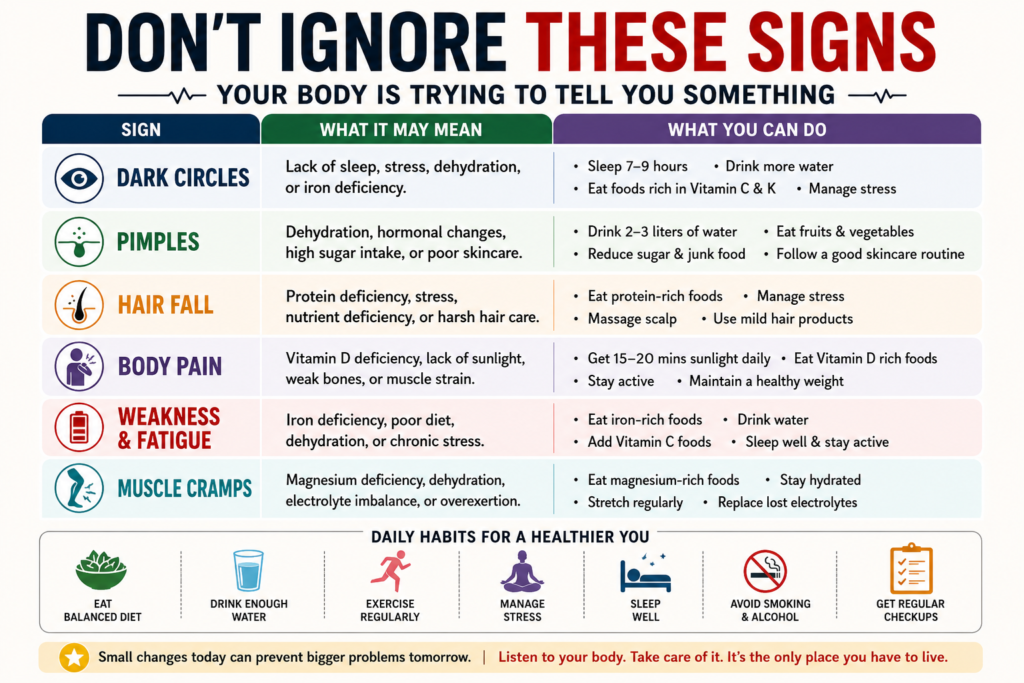
Healthy Lifestyle Habits That Support Your Whole Body
Small daily habits often have the biggest impact on your long-term health.
- Sleep 7–9 hours every night.
- Drink enough water daily.
- Eat a balanced diet with protein, fruits, vegetables, and healthy fats.
- Exercise for at least 30 minutes most days.
- Spend time outdoors for natural sunlight.
- Reduce stress through mindfulness or relaxation techniques.
- Avoid smoking and limit alcohol intake.
- Schedule regular health checkups if symptoms persist.
When Should You See a Doctor?
While these symptoms can sometimes improve with healthy lifestyle changes, persistent or severe problems should never be ignored.
Seek medical advice if you experience:
- Hair loss that continues for several months.
- Severe or worsening body pain.
- Extreme fatigue without an obvious cause.
- Frequent muscle cramps that interfere with daily life.
- Persistent acne that doesn’t respond to proper skincare.
- Dark circles accompanied by unusual weight loss, dizziness, or other concerning symptoms.
A healthcare professional can determine whether vitamin deficiencies, hormonal changes, or underlying medical conditions are contributing to your symptoms.
Final Thoughts on Health Warning Signs
Your body constantly communicates through small signs. Dark circles, pimples, hair fall, body pain, weakness, and muscle cramps may simply be reminders to improve your sleep, hydration, nutrition, and overall lifestyle. However, they can also signal underlying health conditions that deserve medical attention.
Rather than treating symptoms alone, focus on building healthy daily habits that nourish your body from the inside out. Consistent sleep, proper hydration, balanced nutrition, regular exercise, and timely medical care can improve both your appearance and your long-term well-being.
Disclaimer: This article is for educational purposes only and should not replace professional medical advice, diagnosis, or treatment. If symptoms persist or worsen, consult a qualified healthcare provider.