Best Vitamins for Women Daily: A healthy lifestyle starts with giving your body the nutrients it needs every day. While eating a balanced diet is the best way to get vitamins and minerals, many women still don’t get enough essential nutrients because of busy schedules, stress, or poor eating habits.
From supporting strong bones to improving energy levels and glowing skin, vitamins play a major role in women’s overall health. In this guide, we’ll explore the most important vitamins every woman should know about, their benefits, natural food sources, and simple tips to maintain healthy nutrient levels.
Why Vitamins Are Important for Women
Women’s nutritional needs change throughout different stages of life, including adolescence, pregnancy, adulthood, and menopause. Essential vitamins help:
- Support a healthy immune system
- Maintain strong bones and muscles
- Improve skin and hair health
- Increase energy production
- Support heart health
- Promote healthy brain function
- Help regulate hormones
- Reduce the risk of nutrient deficiencies
A balanced diet rich in fruits, vegetables, lean proteins, whole grains, and healthy fats is the foundation of good nutrition.
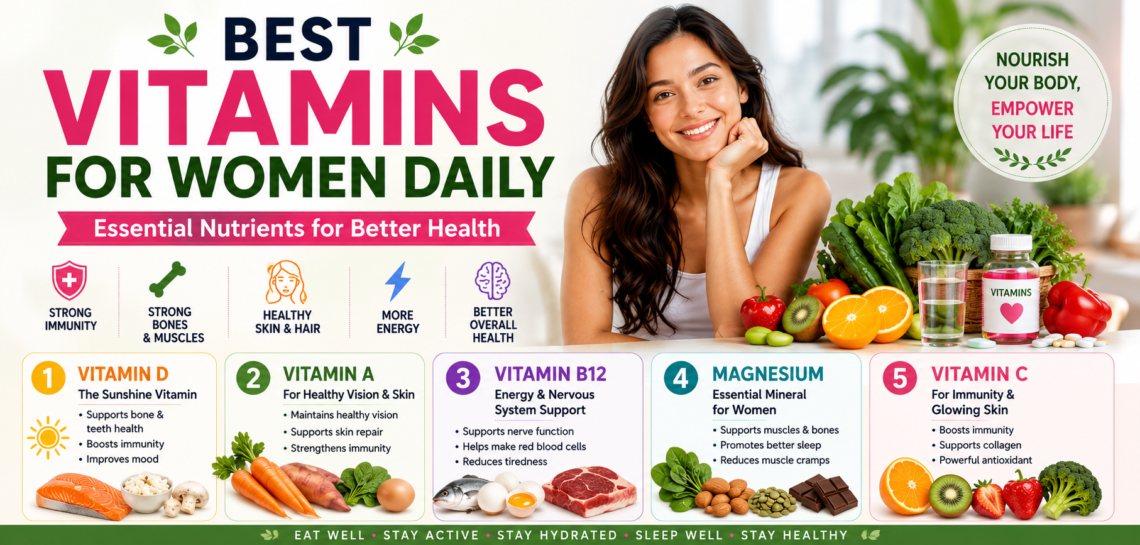
1. Vitamin D – The Sunshine Vitamin
Vitamin D is one of the most important nutrients for women because it helps the body absorb calcium and maintain strong bones.
Benefits of Vitamin D
- Supports bone and teeth health
- Strengthens the immune system
- Helps improve mood
- Supports muscle function
- May reduce the risk of osteoporosis
Natural Food Sources
- Salmon
- Sardines
- Egg yolks
- Fortified milk
- Mushrooms exposed to sunlight
Spending 15–20 minutes in sunlight several times a week may also help your body produce Vitamin D naturally.

2. Vitamin A – For Healthy Vision and Skin
Vitamin A supports healthy eyesight, skin repair, and immune function. It also plays an important role in cell growth.
Benefits
- Maintains healthy vision
- Supports skin repair
- Strengthens immunity
- Promotes healthy reproduction
- Supports cell growth
Best Food Sources
- Carrots
- Sweet potatoes
- Spinach
- Kale
- Eggs
- Liver
Since Vitamin A is fat-soluble, eating it with healthy fats like olive oil or avocado improves absorption.
Also Known:
1. Hormones Imbalanced by PCOS: Symptoms, Causes & Natural Ways to Balance Hormones
2. Breast Health Guide for Women: Daily Care, Warning Signs, Self-Exam & Prevention Tips
3. Vitamin B12 – Energy and Nervous System Support
Vitamin B12 is essential for producing red blood cells and maintaining a healthy nervous system. Women following vegetarian or vegan diets may have a higher risk of deficiency.
Benefits
- Supports nerve function
- Helps make red blood cells
- Reduces tiredness caused by deficiency
- Supports DNA production
- Promotes healthy brain function
Food Sources
- Fish
- Eggs
- Dairy products
- Chicken
- Lean beef
- Fortified breakfast cereals
If you’re vegetarian or vegan, talk to your healthcare provider about whether a B12 supplement is appropriate.
4. Magnesium – The Essential Mineral
Although magnesium is technically a mineral rather than a vitamin, it deserves a place on every woman’s nutrition checklist.
Benefits
- Supports healthy muscles
- Maintains normal blood pressure
- Promotes bone health
- Helps regulate blood sugar
- Supports better sleep
- Reduces muscle cramps
Magnesium-Rich Foods
- Almonds
- Pumpkin seeds
- Spinach
- Bananas
- Black beans
- Dark chocolate
Many adults don’t consume enough magnesium, so including these foods regularly can be beneficial.
5. Vitamin C – For Healthy Skin and Immunity
Vitamin C is a powerful antioxidant that protects the body’s cells and supports collagen production for healthy skin.
Benefits
- Boosts immunity
- Helps produce collagen
- Supports wound healing
- Protects cells from oxidative stress
- Improves iron absorption
Best Food Sources
- Oranges
- Strawberries
- Kiwi
- Bell peppers
- Broccoli
- Tomatoes
Fresh fruits and vegetables provide the highest amount of Vitamin C.
Can Women Get Enough Vitamins from Food?
In most cases, yes. A balanced and varied diet can provide the vitamins and minerals your body needs. However, some women may require supplements due to factors such as pregnancy, ageing, certain medical conditions, or dietary restrictions.
Instead of taking supplements on your own, it’s a good idea to consult a healthcare professional if you think you may have a deficiency. Blood tests can help determine whether supplementation is necessary.

Simple Tips to Improve Your Vitamin Intake
- Eat a colourful variety of fruits and vegetables.
- Include lean protein with every meal.
- Choose whole grains over refined grains.
- Eat healthy fats like nuts, seeds, and avocados.
- Stay hydrated throughout the day.
- Spend safe time outdoors for natural Vitamin D.
- Avoid relying heavily on processed foods.
- Get regular health check-ups to monitor nutrient levels.
Small, consistent habits can make a significant difference in your long-term health.
Final Thoughts on Best Vitamins for Women Daily
Good nutrition is one of the best investments you can make in your health. Vitamins such as Vitamin D, Vitamin A, Vitamin B12, Vitamin C, and magnesium each support different aspects of a woman’s wellbeing—from stronger bones and better immunity to healthy skin, improved energy, and proper muscle function.
Rather than focusing on individual nutrients alone, aim for a balanced lifestyle that includes wholesome foods, regular physical activity, quality sleep, and routine medical check-ups. If you suspect you have a vitamin deficiency or have specific health concerns, seek personalised advice from a qualified healthcare professional.
Making informed choices today can help support your health for years to come.