
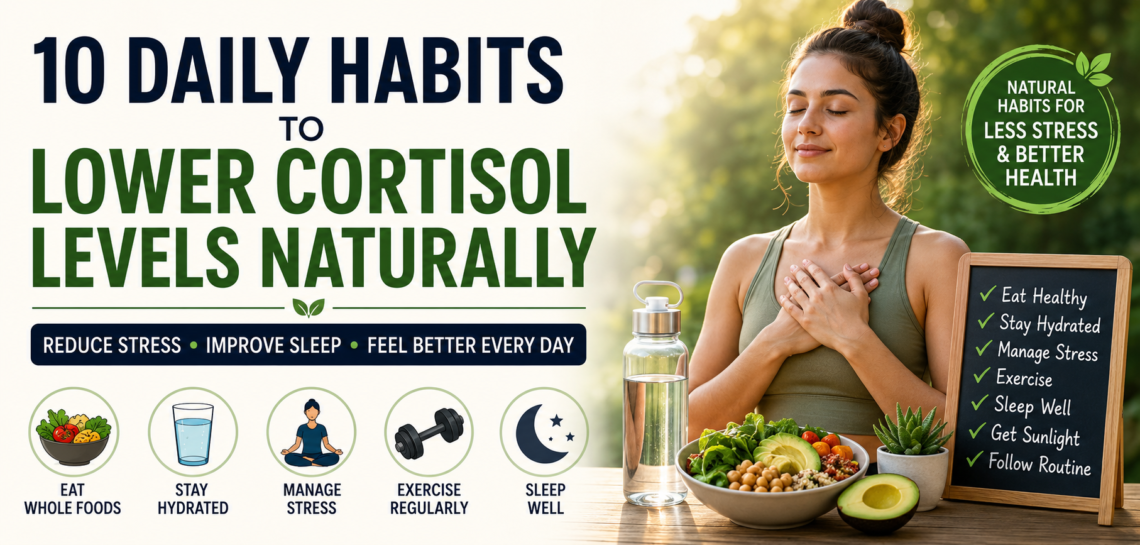
10 Healthy Daily Habits: Stress is a normal part of life, but when your body stays under stress for too long, it produces higher levels of cortisol, often called the stress hormone. Cortisol plays an important role in regulating your metabolism, blood sugar, blood pressure, immune system, and sleep-wake cycle. However, consistently high cortisol levels can affect your physical and mental well-being.
Many people blame cortisol for weight gain, fatigue, or poor sleep, but the truth is more balanced. Cortisol itself isn’t the enemy—it’s chronically elevated cortisol caused by unhealthy habits and ongoing stress that can become a problem.
The good news? Small lifestyle changes can help support healthy cortisol levels naturally. In this guide, you’ll learn which habits may contribute to higher cortisol and which daily routines can help your body maintain a healthier balance.
What Is Cortisol?
Cortisol is a hormone produced by your adrenal glands. It helps your body respond to stress by increasing energy availability and supporting essential functions during challenging situations.
Healthy cortisol levels:
- Help you wake up feeling alert
- Support energy production
- Regulate metabolism
- Reduce inflammation when needed
- Help the body respond to physical and emotional stress
Problems usually arise when stress becomes constant and the body doesn’t get enough time to recover.
Habits That May Contribute to Higher Cortisol
1. Eating Too Much Fast Food
Fast food is often high in refined carbohydrates, unhealthy fats, sodium, and added sugars. A diet dominated by highly processed foods may increase inflammation and make it harder for the body to regulate stress.
Instead:
- Prepare meals at home more often.
- Choose vegetables, lean protein, whole grains, and healthy fats.
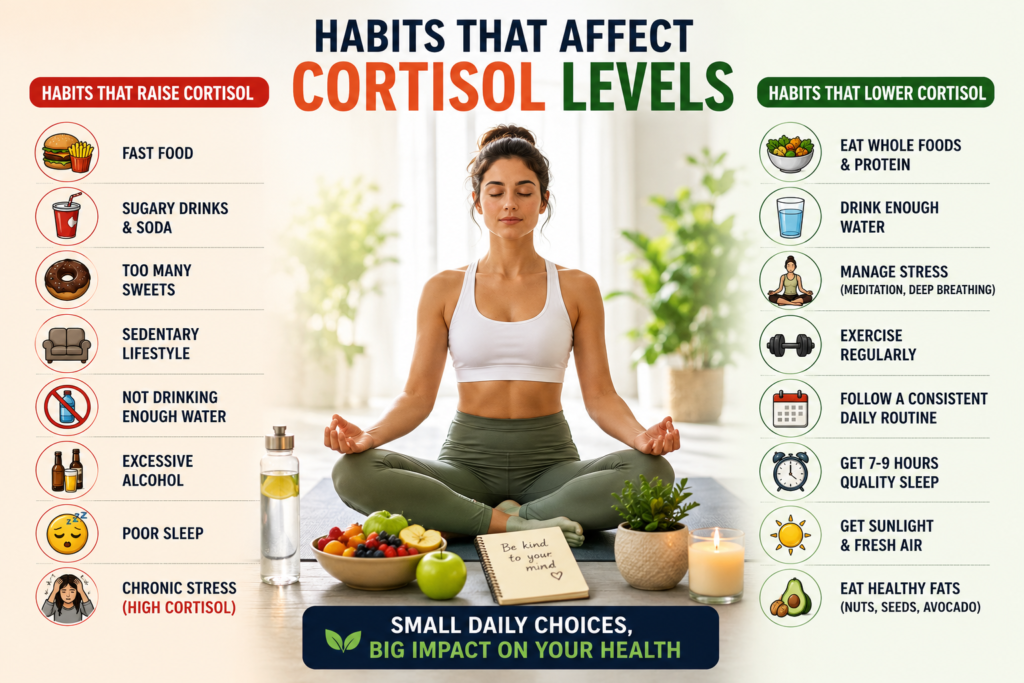
2. Drinking Sugary Beverages
Soft drinks, sweetened coffee, and energy drinks contain large amounts of added sugar. Frequent sugar spikes may affect blood sugar regulation and place additional stress on the body.
Healthier options include:
- Water
- Sparkling water
- Herbal tea
- Unsweetened beverages
3. Eating Too Many Sweets
Desserts are fine occasionally, but consuming excessive sugar every day may contribute to unstable energy levels and increased cravings.
Try replacing sweets with:
- Fresh fruit
- Greek yogurt
- Nuts
- Dark chocolate in moderation
Also Known:
1. Hormones Imbalanced by PCOS: Symptoms, Causes & Natural Ways to Balance Hormones
2. Breast Health Guide for Women: Daily Care, Warning Signs, Self-Exam & Prevention Tips
4. Living a Sedentary Lifestyle
Sitting for long periods without movement may negatively impact overall health.
Simple ways to stay active:
- Walk for 20–30 minutes daily.
- Stretch every hour.
- Take the stairs.
- Stand up regularly if you work at a desk.
5. Not Drinking Enough Water
Even mild dehydration can leave you feeling tired and make daily tasks feel more difficult.
Aim to:
- Drink water consistently throughout the day.
- Increase intake during exercise or hot weather.
- Monitor urine colour—it should generally be light yellow.
6. Excessive Alcohol Consumption
Drinking alcohol frequently or in large amounts can interfere with sleep quality and the body’s normal stress response.
If you drink alcohol:
- Keep it moderate.
- Avoid drinking close to bedtime.
7. Poor Sleep
Sleep is one of the biggest factors influencing healthy hormone balance.
Poor sleep may:
- Increase daytime fatigue
- Affect mood
- Increase appetite
- Make stress harder to manage
8. Chronic Stress
Constant pressure from work, finances, relationships, or lack of downtime can keep the body’s stress response activated.
While some stress is unavoidable, building healthy coping habits can make a significant difference.
Healthy Habits That Support Balanced Cortisol
1. Eat Whole Foods Rich in Protein
Balanced meals help provide steady energy throughout the day.
Include:
- Eggs
- Fish
- Chicken
- Beans
- Lentils
- Greek yogurt
- Vegetables
- Whole grains
Protein helps keep you full longer and supports muscle maintenance.
2. Stay Hydrated
Water supports nearly every function in your body.
Helpful tips:
- Carry a reusable water bottle.
- Drink a glass of water after waking up.
- Increase fluids after workouts.
3. Practice Stress Management
Managing stress doesn’t require hours of meditation.
Simple techniques:
- Deep breathing for five minutes
- Journaling
- Gentle yoga
- Listening to calming music
- Spending time in nature
Even a few minutes each day can help you feel more relaxed.
4. Exercise Regularly
Moderate physical activity supports overall health and may improve mood.
Great options include:
- Walking
- Cycling
- Swimming
- Strength training
- Dancing
Aim for at least 150 minutes of moderate exercise per week, along with muscle-strengthening activities on two or more days if appropriate for your fitness level.
5. Follow a Consistent Daily Routine
Your body thrives on regular schedules.
Try to:
- Wake up at the same time daily.
- Eat meals consistently.
- Exercise regularly.
- Go to bed at a similar time each night.
6. Prioritise Quality Sleep
Adults generally need 7–9 hours of quality sleep each night.
Improve sleep by:
- Limiting screen time before bed.
- Keeping your bedroom cool and dark.
- Avoiding heavy meals late at night.
- Maintaining a regular bedtime.
7. Spend Time Outdoors
Natural daylight helps regulate your body’s internal clock.
Benefits include:
- Better mood
- Improved sleep patterns
- More opportunities for physical activity
Even 15–30 minutes outside each day can be beneficial.
8. Include Healthy Fats
Healthy fats support overall nutrition and help keep meals satisfying.
Choose:
- Avocados
- Walnuts
- Almonds
- Chia seeds
- Flaxseeds
- Olive oil

Can Lowering Cortisol Help With Weight Management?
Chronic stress may influence eating habits, sleep quality, and physical activity—all of which can affect body weight. While managing stress is an important part of a healthy lifestyle, weight changes are influenced by many factors, including diet, exercise, genetics, medical conditions, and overall health.
Instead of focusing only on cortisol, aim for long-term healthy habits that support your physical and mental well-being.
Final Thoughts on 10 Healthy Daily Habits
Cortisol is an essential hormone that helps your body function normally. The goal isn’t to eliminate cortisol but to support healthy, balanced levels through sustainable daily habits.
Eating nutritious foods, staying hydrated, exercising regularly, sleeping well, managing stress, and maintaining a consistent routine can all contribute to better overall health. Remember that lasting results come from small, consistent changes rather than quick fixes.
If you experience persistent fatigue, unexplained weight changes, severe anxiety, or symptoms that concern you, it’s a good idea to consult a qualified healthcare professional for personalised advice.





One comment on “Cortisol and Your Health: Daily Habits That Raise or Lower Stress Hormones Naturally”