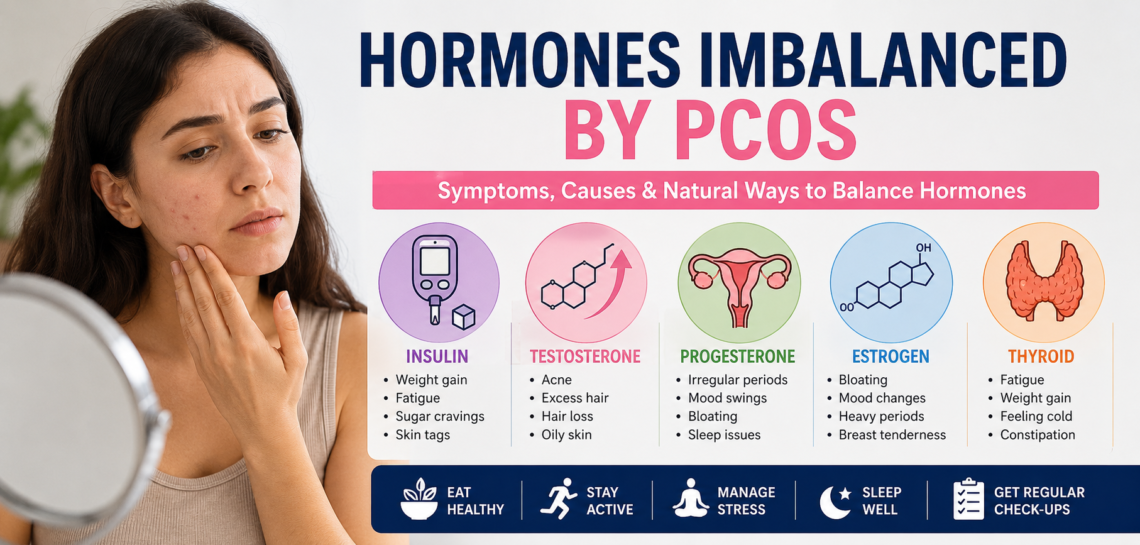
Hormones Imbalanced by PCOS: Polycystic Ovary Syndrome (PCOS) is one of the most common hormonal disorders affecting women of reproductive age. While many people associate PCOS with irregular periods or ovarian cysts, the condition actually impacts several important hormones throughout the body.
Hormonal imbalance caused by PCOS can influence your skin, hair, metabolism, sleep, weight, and overall well-being. Understanding which hormones are affected can help you recognize symptoms early and discuss the right treatment options with your healthcare provider.
In this guide, we’ll explore the five major hormones commonly affected by PCOS, their symptoms, and healthy lifestyle habits that may help support hormonal balance.
What Is PCOS?
PCOS is a hormonal condition where the ovaries produce higher-than-normal levels of certain hormones, especially androgens (often called male hormones). This hormonal imbalance can interfere with normal ovulation, making menstrual cycles irregular and contributing to various physical symptoms.
Common signs of PCOS include:
- Irregular or missed periods
- Weight gain
- Acne
- Excess facial or body hair
- Hair thinning
- Difficulty getting pregnant
- Insulin resistance
Every woman experiences PCOS differently, which is why understanding the underlying hormones is so important.
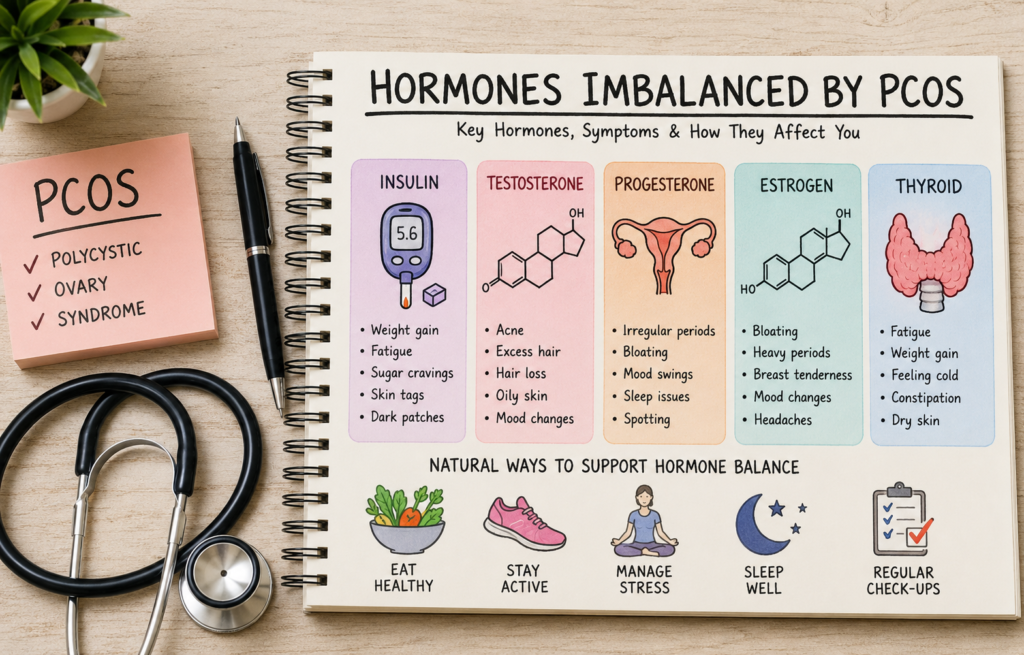
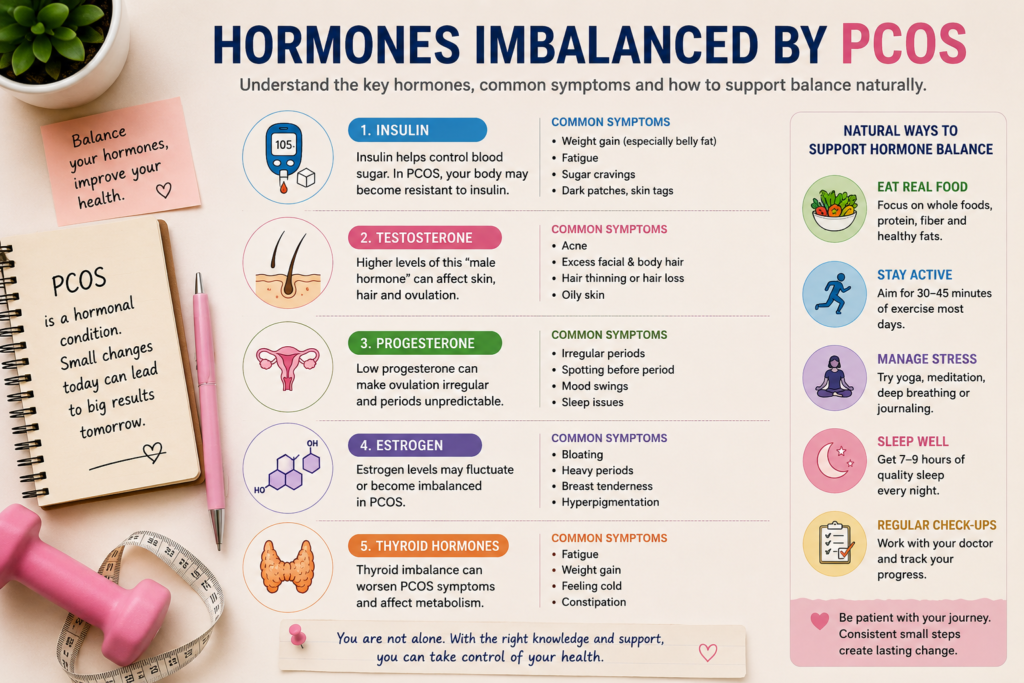
1. Insulin: The Hormone That Controls Blood Sugar
One of the biggest hormonal problems in PCOS is insulin resistance.
Insulin helps move glucose from the bloodstream into cells for energy. In many women with PCOS, the body becomes less responsive to insulin, forcing the pancreas to produce more.
Common Symptoms
- Dark patches of skin, especially around the neck or underarms
- Skin tags
- Weight gain around the abdomen
- Increased hunger
- Fatigue after meals
High insulin levels can also stimulate the ovaries to produce more testosterone, making PCOS symptoms worse.
Healthy Lifestyle Tips
- Choose high-fiber foods
- Eat balanced meals with protein
- Exercise regularly
- Limit sugary drinks and processed snacks
- Maintain a healthy weight if recommended by your doctor
2. Testosterone: Why PCOS Can Affect Skin and Hair
Although women naturally produce small amounts of testosterone, PCOS often causes higher-than-normal levels.
This increase can affect hair growth, skin health, and ovulation.
Common Symptoms
- Excess facial hair
- Hair growth on the chest or abdomen
- Hair thinning or scalp hair loss
- Jawline acne
- Oily skin
These symptoms vary greatly from person to person.
Natural Ways to Support Hormonal Health
Healthy habits that improve insulin sensitivity may also help reduce androgen-related symptoms, including:
- Regular physical activity
- Adequate sleep
- A balanced diet
- Stress management
Medical treatments should always be discussed with a qualified healthcare professional.
Also Known:
1. 7 Morning Habits That Can Transform Your Health Naturally
2. Breast Health Foods: Nutrient-Rich Foods That Support Overall Breast Wellness Naturally
3. Progesterone: The Hormone That Supports Regular Cycles
Progesterone rises after ovulation.
Since many women with PCOS do not ovulate regularly, progesterone levels may remain lower than expected.
Possible Symptoms
- Irregular periods
- Spotting before menstruation
- Difficulty sleeping
- Mood changes
- Adult acne
Without regular ovulation, menstrual cycles may become unpredictable.
Supporting Healthy Cycles
Lifestyle changes alone may not restore ovulation for everyone, but maintaining overall health through nutrition, exercise, and stress reduction may improve menstrual regularity in some individuals.
4. Estrogen: When Hormonal Balance Is Disrupted
Estrogen is essential for reproductive health, bone health, and skin.
PCOS doesn’t always mean estrogen is low. Instead, estrogen levels may fluctuate or become unbalanced relative to progesterone.
Possible Symptoms
- Heavy menstrual bleeding
- Breast tenderness
- Facial pigmentation changes
- Bloating
- Mood swings
Because estrogen and progesterone work together, irregular ovulation can disrupt their normal balance.
Healthy Habits
Focus on an anti-inflammatory lifestyle:
- Eat plenty of vegetables
- Include healthy fats
- Stay physically active
- Maintain a healthy body weight
- Avoid smoking
5. Thyroid Hormones: Another Important Piece of the Puzzle
Although thyroid disorders are separate medical conditions, they can occur alongside PCOS.
Since many symptoms overlap, healthcare providers may recommend thyroid testing.
Possible Symptoms
- Constipation
- Feeling cold frequently
- Fatigue
- Dry skin
- Weight changes
- Slow metabolism
Not every woman with PCOS has thyroid disease, but evaluating thyroid function can help identify other causes of similar symptoms.
How Hormonal Imbalance Affects Your Skin
Hormones play a major role in skin health.
Women with PCOS commonly experience:
- Persistent acne
- Oily skin
- Hyperpigmentation
- Skin tags
- Darkened skin folds
- Increased facial hair
Treating the underlying hormonal imbalance often improves these skin concerns over time.
Lifestyle Habits That May Help Manage PCOS
While there is no single cure for PCOS, healthy daily habits can make a significant difference.
Prioritize Nutritious Foods
Choose:
- Lean proteins
- Whole grains
- Fruits
- Vegetables
- Healthy fats
- High-fiber foods
Exercise Regularly
Aim for at least 150 minutes of moderate physical activity each week, combining cardio and strength training when possible.
Improve Sleep
Poor sleep can worsen insulin resistance and hormone regulation.
Try to get 7–9 hours of quality sleep every night.
Manage Stress
Chronic stress may influence hormones and inflammation.
Helpful strategies include:
- Meditation
- Deep breathing
- Yoga
- Walking outdoors
- Journaling
Work With Your Healthcare Provider
PCOS treatment is highly individual. Your healthcare provider may recommend:
- Blood tests
- Lifestyle modifications
- Medications
- Nutritional counseling
- Fertility treatment if needed
When Should You See a Doctor?
Consider speaking with a healthcare professional if you experience:
- Irregular or absent periods
- Excess facial hair
- Severe acne
- Rapid hair loss
- Difficulty becoming pregnant
- Sudden weight gain
- Dark patches of skin
- Persistent fatigue
Early diagnosis can help reduce the risk of long-term complications such as type 2 diabetes, high cholesterol, and cardiovascular disease.
Final Thoughts on Hormones Imbalanced by PCOS
PCOS is much more than an ovarian condition—it affects multiple hormones that influence nearly every system in the body. Insulin, testosterone, progesterone, estrogen, and thyroid hormones each play an important role in your health, and imbalance in one often affects the others.
The good news is that many women successfully manage PCOS through a combination of healthy lifestyle habits, regular medical care, and personalized treatment. If you’re experiencing symptoms, don’t ignore them. Early evaluation and ongoing support can improve both your hormonal health and your overall quality of life.



2 Comments on “Hormones Imbalanced by PCOS: Symptoms, Causes & Natural Ways to Balance Hormones”