Healthy Habits to Stay Young: Turning 40 doesn’t mean slowing down—it means taking better care of your body and mind. While aging is a natural process, your daily habits have a major impact on how you look, feel, and function. Small lifestyle changes can help you maintain healthy skin, strong muscles, better energy, and a sharper mind for years to come.
In this guide, you’ll discover 10 healthy habits to stay young after 40 that are practical, research-supported, and easy to follow. These habits focus on overall wellness rather than quick fixes, making them ideal for long-term health.
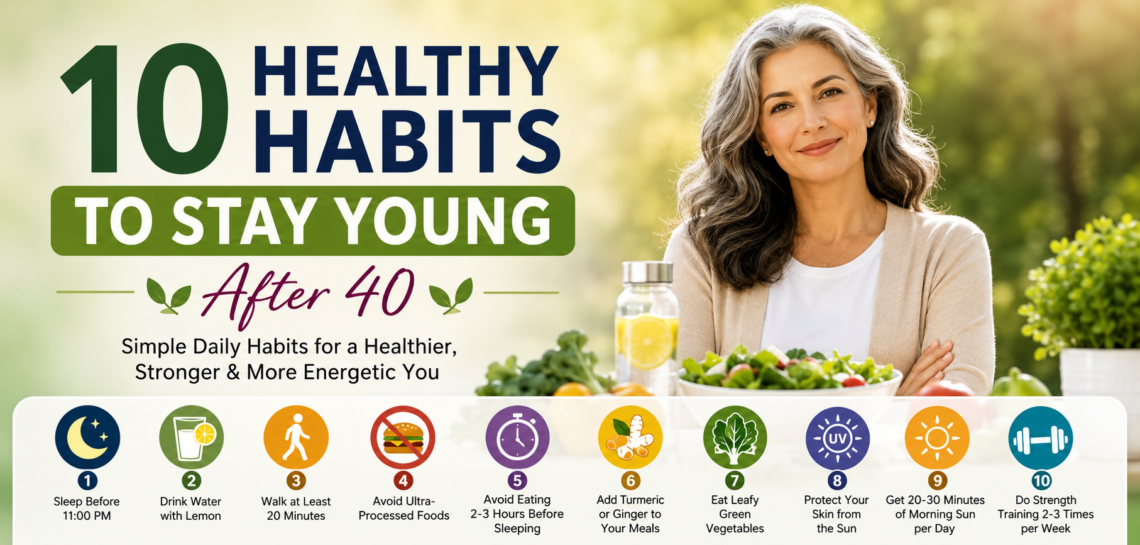
1. Sleep Before 11 PM Every Night
Quality sleep is one of the most powerful anti-aging tools available. During deep sleep, your body repairs cells, balances hormones, and supports brain function.
Benefits:
- Supports healthy skin repair
- Improves memory and concentration
- Strengthens the immune system
- Helps regulate weight and metabolism
Healthy Habit: Aim for 7–9 hours of sleep each night and try to go to bed before 11 PM consistently.
2. Drink Water with Lemon Daily
Starting your morning with a glass of water helps rehydrate your body after sleep. Adding fresh lemon provides vitamin C and enhances the flavor, encouraging better hydration.
Benefits:
- Supports hydration
- Provides antioxidants
- Promotes healthy digestion
- Helps maintain healthy skin
Note: Lemon water isn’t a miracle drink, but it can be a healthy part of your daily routine.

3. Walk for at Least 20 Minutes Every Day
Walking is one of the simplest exercises with significant health benefits.
Why Walking Matters
Regular walking can:
- Improve heart health
- Increase daily energy
- Support joint mobility
- Help manage body weight
- Reduce stress
A brisk 20–30 minute walk most days of the week is enough to make a noticeable difference.
4. Limit Ultra-Processed Foods
Highly processed foods often contain excess sugar, sodium, unhealthy fats, and artificial ingredients that may negatively affect long-term health.
Choose More Whole Foods Like:
- Fresh fruits
- Vegetables
- Whole grains
- Beans and legumes
- Nuts and seeds
- Lean protein
Replacing processed snacks with nutritious whole foods can improve energy levels and overall wellness.
5. Avoid Eating 2–3 Hours Before Bed
Late-night eating may interfere with digestion and sleep quality.
Benefits of Earlier Dinners
- Better digestion
- Improved sleep
- Easier weight management
- Reduced nighttime acid reflux
Try to finish dinner at least 2–3 hours before bedtime whenever possible.
Also Known:
1. Breast Health Guide for Women: Daily Care, Warning Signs, Self-Exam & Prevention Tips
2. How to Lose Belly Fat Naturally: Simple Nutrition and Movement Tips That Really Work
6. Add Turmeric or Ginger to Your Meals
Turmeric and ginger have been used in traditional cooking for centuries and contain natural plant compounds with antioxidant properties.
Easy Ways to Include Them
- Add turmeric to soups or rice
- Use fresh ginger in tea
- Mix into smoothies
- Season roasted vegetables
While these ingredients are healthy additions to meals, they are not substitutes for medical treatment.
7. Eat More Leafy Green Vegetables
Leafy greens are packed with vitamins, minerals, and fiber that support healthy aging.
Great Choices Include:
- Spinach
- Kale
- Swiss chard
- Lettuce
- Arugula
These vegetables provide nutrients that support:
- Bone health
- Eye health
- Heart health
- Healthy digestion
Aim to include at least one serving of leafy greens every day.
8. Protect Your Skin from the Sun
Sun exposure is one of the leading causes of premature skin aging.
Daily Sun Protection Tips
- Wear broad-spectrum sunscreen (SPF 30 or higher)
- Wear sunglasses
- Use a wide-brim hat outdoors
- Seek shade during peak sunlight hours
Protecting your skin daily can reduce wrinkles, sunspots, and the risk of skin damage.
9. Get 20–30 Minutes of Morning Sunlight
Morning sunlight helps regulate your body’s internal clock and supports vitamin D production.
Benefits
- Supports healthy sleep patterns
- Improves mood
- Helps maintain bone health
- Boosts daytime energy
Spend around 20–30 minutes outdoors in the morning while following safe sun exposure practices.

10. Do Strength Training 2–3 Times Each Week
After age 40, muscle mass naturally declines over time. Strength training helps maintain muscle strength, balance, and mobility.
Simple Strength Exercises
- Bodyweight squats
- Wall push-ups
- Resistance band exercises
- Dumbbell workouts
- Lunges
Strength training also supports healthy bones and improves overall physical function.
Bonus Healthy Habits for Healthy Aging
Along with these 10 habits, consider adding these simple practices:
- Manage stress with meditation or deep breathing.
- Stay socially connected with family and friends.
- Avoid smoking and limit alcohol consumption.
- Schedule regular health checkups.
- Read books or learn new skills to keep your brain active.
These habits work together to support long-term physical and mental well-being.
Frequently Asked Questions (FAQs)
Can these habits really slow aging?
These habits won’t stop aging, but they can support healthy aging by improving sleep, nutrition, fitness, and overall health.
Is walking enough exercise after 40?
Walking is excellent for cardiovascular health. Combining it with strength training and flexibility exercises provides even greater benefits.
How much water should adults drink?
Hydration needs vary, but many adults benefit from drinking enough water throughout the day to stay well hydrated. Needs depend on activity level, climate, and overall health.
Which habit should I start first?
Start with one or two habits, such as improving sleep and walking daily. Once they become routine, gradually add the others.
Final Thoughts on Healthy Habits to Stay Young
Healthy aging isn’t about finding a miracle solution—it’s about making consistent choices every day. Sleeping well, staying active, eating nutritious foods, protecting your skin, and maintaining healthy routines can help you feel stronger, more energetic, and healthier after 40.
Remember, lasting results come from consistency rather than perfection. Even small improvements in your daily lifestyle can make a meaningful difference over time.