
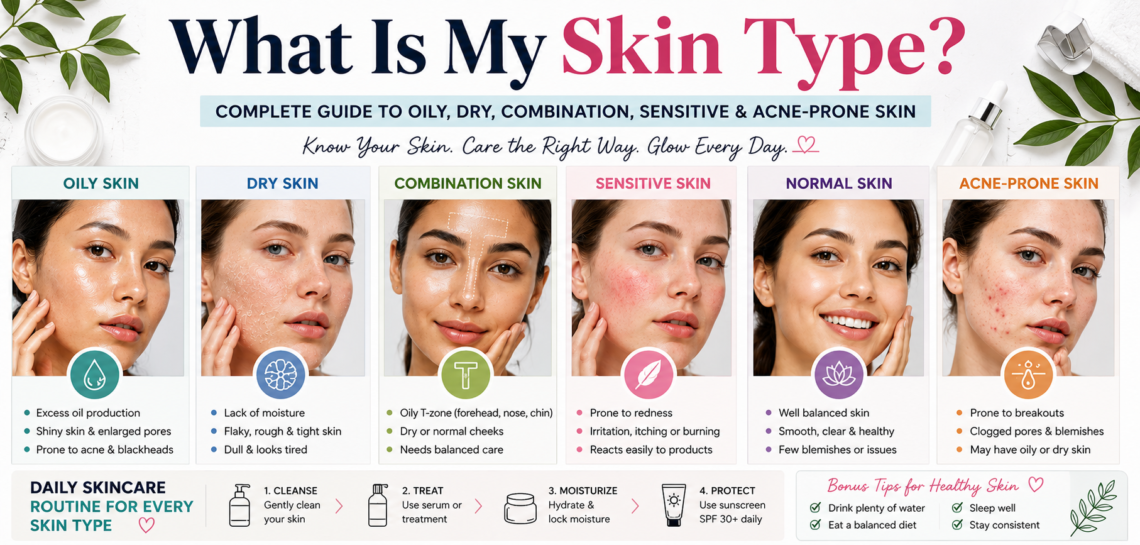
Skin Type Guide 2026: Understanding your skin type is the first step toward building a skincare routine that actually works. Many people spend money on expensive products without realizing they’re using formulas that don’t match their skin’s needs. Whether your skin is oily, dry, combination, sensitive, normal, or acne-prone, knowing its unique characteristics can help you achieve healthier, clearer, and more radiant skin.
In this guide, we’ll explain what each skin type is telling you and how to care for it with simple, dermatologist-friendly skincare tips.
Why Knowing Your Skin Type Matters
Your skin naturally produces oil (sebum) to protect itself. However, factors like genetics, age, hormones, climate, and lifestyle affect how much oil your skin produces and how it behaves.
Using products designed for the wrong skin type can lead to:
- Breakouts
- Dry patches
- Excess oil
- Redness
- Skin irritation
- Premature aging
Identifying your skin type allows you to choose ingredients that improve your skin instead of causing problems.
1. Oily Skin
Oily skin produces excess sebum, making the face appear shiny throughout the day.
Signs of Oily Skin
- Greasy shine within a few hours of washing
- Enlarged pores
- Frequent blackheads and whiteheads
- Makeup slides off quickly
What Your Skin Is Telling You
Your oil glands are highly active. While this can lead to acne, oily skin often ages more slowly because natural oils help maintain moisture.
Best Skincare Tips
- Wash your face twice daily with a gentle cleanser.
- Use oil-free, non-comedogenic moisturizers.
- Choose lightweight gel-based products.
- Apply sunscreen every day.
- Use salicylic acid or niacinamide to reduce oil production.
2. Dry Skin
Dry skin lacks natural moisture and often feels tight after cleansing.
Signs of Dry Skin
- Flaky patches
- Rough texture
- Tight feeling
- Dull appearance
- Fine lines appear more noticeable
What Your Skin Is Telling You
Your skin barrier needs hydration and protection. Without enough moisture, skin becomes more vulnerable to irritation and environmental damage.
Best Skincare Tips
- Use a creamy, hydrating cleanser.
- Apply moisturizer immediately after washing.
- Look for ingredients like hyaluronic acid, ceramides, and glycerin.
- Avoid long hot showers.
- Use a humidifier during dry seasons.
Also Known:
1. Glowing Skin Starts Here: A Simple Daily Routine for Healthy, Radiant Skin
2. Benefits of Icing Your Skin: 8 Science-Backed Reasons for Healthy, Glowing Skin
3. Combination Skin
Combination skin is the most common skin type.
Signs of Combination Skin
- Oily forehead, nose, and chin (T-zone)
- Dry or normal cheeks
- Different skin concerns in different areas
What Your Skin Is Telling You
Your skin requires balanced care rather than treating the entire face the same way.
Best Skincare Tips
- Use a gentle cleanser.
- Apply lightweight moisturizer all over.
- Use clay masks only on oily areas.
- Hydrate dry zones with richer creams when needed.
- Avoid harsh products that strip natural oils.
4. Sensitive Skin
Sensitive skin reacts easily to products, weather, or environmental changes.
Signs of Sensitive Skin
- Redness
- Burning sensation
- Itching
- Stinging
- Frequent irritation
What Your Skin Is Telling You
Your skin barrier is weaker than normal and needs gentle care.
Best Skincare Tips
- Choose fragrance-free skincare.
- Patch test new products before use.
- Avoid alcohol-based toners.
- Use calming ingredients like aloe vera, oat extract, and centella asiatica.
- Limit exfoliation to once a week.
5. Normal Skin
Normal skin is naturally balanced and healthy.
Signs of Normal Skin
- Smooth texture
- Small pores
- Few breakouts
- Even skin tone
- Comfortable throughout the day
What Your Skin Is Telling You
Your skin barrier is functioning well, but maintaining healthy habits is essential.
Best Skincare Tips
- Cleanse twice daily.
- Moisturize every day.
- Wear SPF 30 or higher.
- Eat a balanced diet.
- Stay hydrated.
6. Acne-Prone Skin
Acne-prone skin can occur with oily, combination, or even dry skin.
Signs of Acne-Prone Skin
- Pimples
- Blackheads
- Whiteheads
- Clogged pores
- Occasional cystic acne
What Your Skin Is Telling You
Your pores become blocked by excess oil, dead skin cells, bacteria, or hormonal changes.
Best Skincare Tips
- Never pick pimples.
- Use non-comedogenic skincare products.
- Cleanse gently twice daily.
- Look for ingredients like salicylic acid, benzoyl peroxide, or adapalene.
- Keep pillowcases and makeup brushes clean.
How to Identify Your Skin Type at Home
Try this simple test:
- Wash your face with a gentle cleanser.
- Pat dry.
- Wait for 30–60 minutes without applying any skincare products.
- Observe your skin.
- Shiny all over: Oily skin
- Tight and flaky: Dry skin
- Oily T-zone with dry cheeks: Combination skin
- Red or irritated: Sensitive skin
- Comfortable and balanced: Normal skin
Daily Skincare Routine for Every Skin Type
A simple routine works best:
Morning
- Gentle cleanser
- Moisturizer
- Broad-spectrum sunscreen (SPF 30+)
Evening
- Cleanser
- Treatment serum (if needed)
- Moisturizer
Consistency is more important than using many products.
Lifestyle Tips for Healthier Skin
Healthy skin starts from within. Follow these habits:
- Drink enough water daily.
- Eat fruits, vegetables, and healthy fats.
- Sleep 7–9 hours each night.
- Manage stress through exercise or meditation.
- Avoid smoking and limit excessive sugar intake.
- Remove makeup before bed.
Common Skincare Mistakes to Avoid
- Overwashing your face
- Skipping sunscreen
- Using too many active ingredients at once
- Sleeping with makeup on
- Picking acne
- Ignoring your skin type when buying products
Final Thoughts on Skin Type Guide 2026
Your skin is constantly communicating its needs. Whether it’s producing excess oil, feeling dry, becoming irritated, or breaking out, these signs are valuable clues that help you choose the right skincare routine. By understanding your skin type and using gentle, suitable products consistently, you can improve your skin’s health and maintain a natural glow over time.
Remember that no skin type is “better” than another—each simply requires the right care. Listen to what your skin is telling you, stay consistent with your routine, and protect your skin daily with hydration and sunscreen. Healthy skin is built through good habits, patience, and informed choices rather than quick fixes.





One comment on “Skin Type Guide 2026: How to Care for Oily, Dry, Combination & Sensitive Skin”