Healthy hair doesn’t happen by chance—it happens through a consistent hair care routine. Whether you’re struggling with frizz, dryness, hair fall, or dull-looking strands, following the right hair care steps can dramatically improve your hair’s appearance and overall health.
Many people spend money on expensive hair products but skip the basics. The truth is that a simple, effective hair care routine can make a huge difference. In this guide, you’ll learn the essential steps for maintaining beautiful, healthy hair and discover expert tips to keep your locks looking their best every day.
Why a Proper Hair Care Routine Matters
Your hair faces daily stress from pollution, heat styling, sun exposure, and chemical treatments. Without proper care, these factors can lead to:
- Hair breakage
- Split ends
- Excessive hair fall
- Dry and brittle strands
- Frizz and dullness
- Scalp irritation
A structured hair care routine helps protect your hair, nourish your scalp, and maintain long-term hair health.
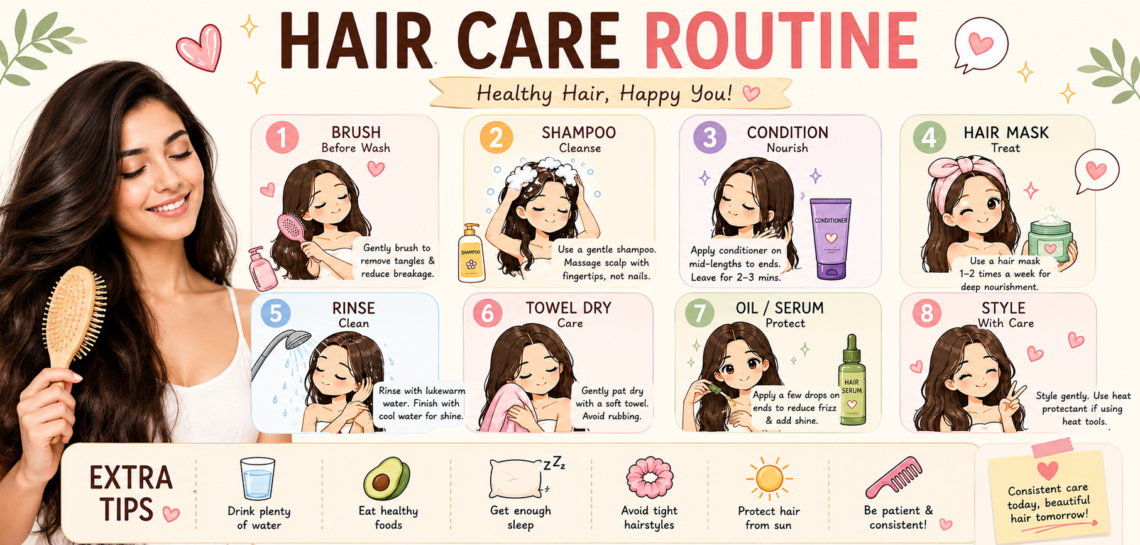
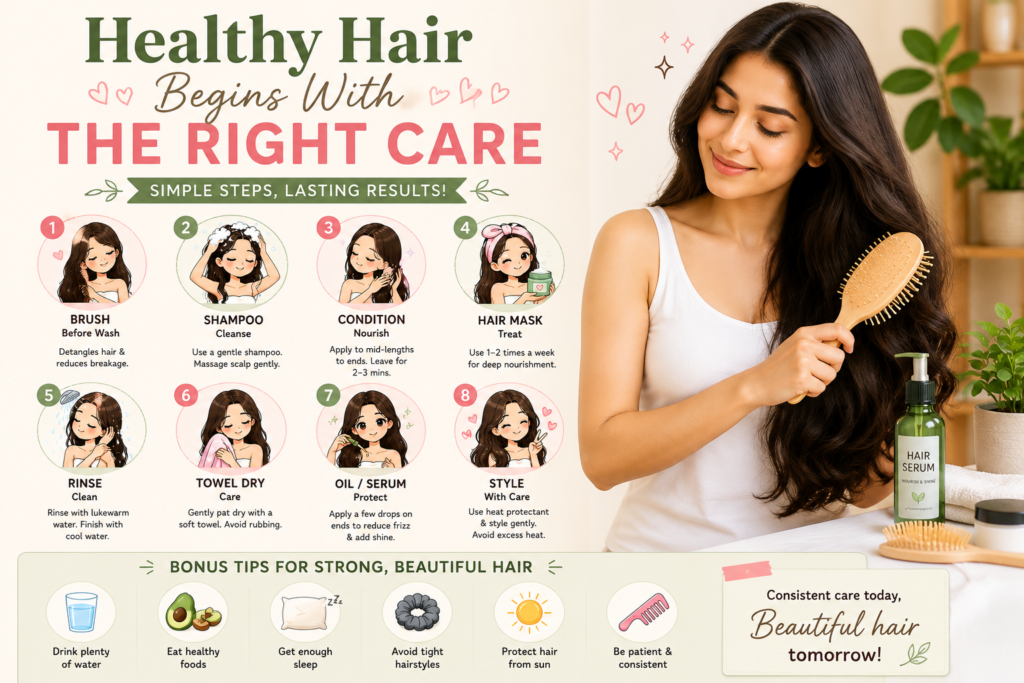
Step 1: Brush Your Hair Before Washing
Brushing your hair before shampooing is one of the most overlooked hair care tips.
Benefits of Pre-Wash Brushing
- Removes tangles and knots
- Distributes natural scalp oils
- Reduces hair breakage during washing
- Makes shampooing easier
Use a wide-tooth comb or a gentle detangling brush. Start from the ends and gradually work your way upward to avoid pulling and damaging your hair.
Step 2: Shampoo Your Hair Properly
Shampooing is essential for removing dirt, oil, sweat, and product buildup from the scalp.
How to Shampoo Correctly
- Wet your hair thoroughly with lukewarm water.
- Apply a small amount of shampoo to your scalp.
- Massage gently using your fingertips.
- Avoid scratching with your nails.
- Rinse completely.
Pro Tip
Choose a sulfate-free shampoo if you have dry, damaged, or color-treated hair. Overwashing can strip natural oils, so most people only need to shampoo 2–3 times per week.
Step 3: Apply Conditioner
Conditioner plays a crucial role in restoring moisture and improving hair manageability.
Why Conditioning Is Important
Reduces frizz
Adds softness and shine
Prevents tangles
Protects hair from breakage
Apply conditioner mainly to the mid-lengths and ends of your hair. Avoid applying it directly to the scalp, especially if you have oily hair.
Leave it on for 2–3 minutes before rinsing thoroughly.
Step 4: Use a Hair Mask Weekly
A nourishing hair mask provides deep hydration and repair that regular conditioner cannot offer.
Benefits of Hair Masks
- Repairs damaged hair
- Restores moisture
- Improves elasticity
- Enhances shine
- Reduces split ends
Use a hair mask once or twice a week depending on your hair’s needs.
Popular Natural Hair Masks
- Coconut oil and honey mask
- Aloe vera hair mask
- Yogurt and egg hair treatment
- Avocado hair mask
Regular deep conditioning treatments can significantly improve hair texture over time.
Also Known:
1. 15 Ways to Help Your Hair Grow Faster and Stronger
2. Easy DIY Prom Hairstyles: 10 Stunning Styles You Can Create at Home
Step 5: Rinse with Lukewarm Water
Water temperature affects hair health more than most people realize.
Best Practice
- Use lukewarm water for washing.
- Finish with cool water.
Cool water helps seal the hair cuticle, making hair appear smoother and shinier while reducing frizz also a major part in Hair Care Routine.
Avoid extremely hot water, as it can dry out both the scalp and hair strands.
Step 6: Towel Dry Gently
Wet hair is more fragile and prone to breakage.
Correct Drying Method
Instead of rubbing your hair aggressively with a towel:
Gently squeeze out excess water.
Pat your hair dry.
Use a microfiber towel whenever possible.
Microfiber towels reduce friction and help minimize frizz and damage.
Step 7: Apply Hair Oil or Serum
Hair oils and serums provide an extra layer of protection and nourishment.
Benefits of Hair Serums
- Controls frizz
- Adds shine
- Protects against environmental damage
- Makes hair easier to style
Apply a few drops to the ends and mid-lengths of damp or dry hair.
Best Oils for Hair Care
- Argan oil
- Coconut oil
- Jojoba oil
- Rosemary oil (diluted)
- Almond oil
Avoid applying excessive amounts, as this can make hair appear greasy.
Step 8: Style with Care
Frequent heat styling can weaken hair over time.
Safe Styling Tips for Hair Care Routine
- Use heat protectant sprays.
- Limit heat tool usage.
- Choose lower temperature settings.
- Avoid tight hairstyles that pull on the roots.
- Give your hair occasional styling breaks.
Protecting your hair during styling is key to preventing long-term damage.
Extra Hair Care Routine Tips for Faster Hair Growth and Healthier Hair
In addition to your routine, these lifestyle habits can improve hair health from within:
Stay Hydrated
Drink plenty of water throughout the day. Hydration supports scalp health and hair growth.
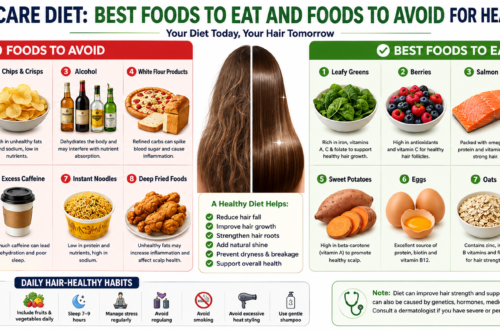
Eat Nutrient-Rich Foods
Focus on foods rich in:
- Protein
- Iron
- Biotin
- Zinc
- Omega-3 fatty acids
- Vitamins A, C, D, and E
Get Enough Sleep
Quality sleep allows your body to repair and regenerate cells, including those responsible for healthy hair growth.
Avoid Tight Hairstyles
Constant tension from tight ponytails, buns, and braids can cause hair breakage and even traction alopecia.
Protect Hair from Sun Damage
Wear hats or use UV-protective hair products when spending long periods outdoors.
Be Consistent
Hair improvements take time. Following your routine consistently for several weeks or months will produce the best results.
Final Thoughts on Hair Care Routine
A healthy Hair Care Routine doesn’t need to be complicated. By following these simple steps—brushing, shampooing, conditioning, masking, rinsing properly, gentle drying, applying serum, and styling carefully—you can achieve stronger, shinier, and healthier hair naturally.
Hair Care Routine: Remember that consistency is the secret to beautiful hair. Combine these hair care practices with proper nutrition, hydration, and healthy lifestyle habits, and you’ll be well on your way to achieving the gorgeous, healthy hair you’ve always wanted.