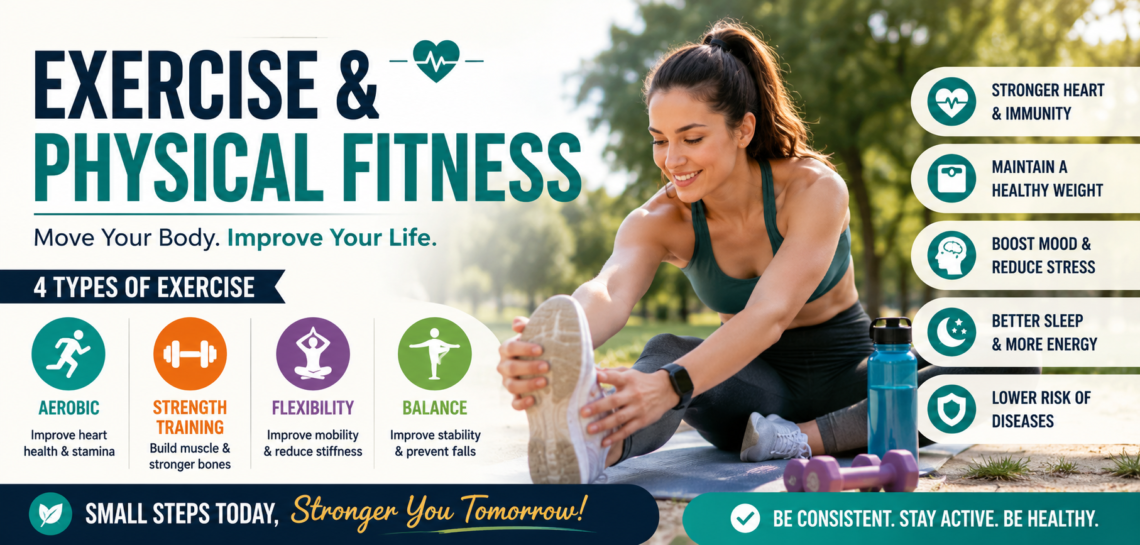
Exercise and Physical Fitness: Living a healthy life doesn’t require spending hours in the gym or following complicated workout routines. One of the most effective ways to improve your overall health is by making regular exercise a part of your daily routine. Whether you’re just getting started or returning after a long break, every step toward a more active lifestyle makes a difference.
Exercise improves your body, supports mental well-being, increases energy, and lowers the risk of many chronic diseases. The key is finding activities you enjoy and staying consistent.
Why Exercise Is Important
Regular physical activity offers benefits for people of all ages. Even moderate exercise performed several days a week can improve your quality of life.
Some major benefits include:
- Improves heart health
- Helps maintain a healthy weight
- Builds stronger muscles and bones
- Boosts energy levels
- Supports better sleep
- Reduces stress and anxiety
- Improves mood and mental health
- Increases flexibility and balance
- Lowers the risk of diabetes and heart disease
Four Essential Types of Exercise
1. Aerobic Exercise
Aerobic workouts increase your heart rate and improve cardiovascular health.
Popular examples include:
- Walking
- Running
- Cycling
- Swimming
- Dancing
- Hiking
Aim for at least 150 minutes of moderate aerobic activity each week.
2. Strength Training
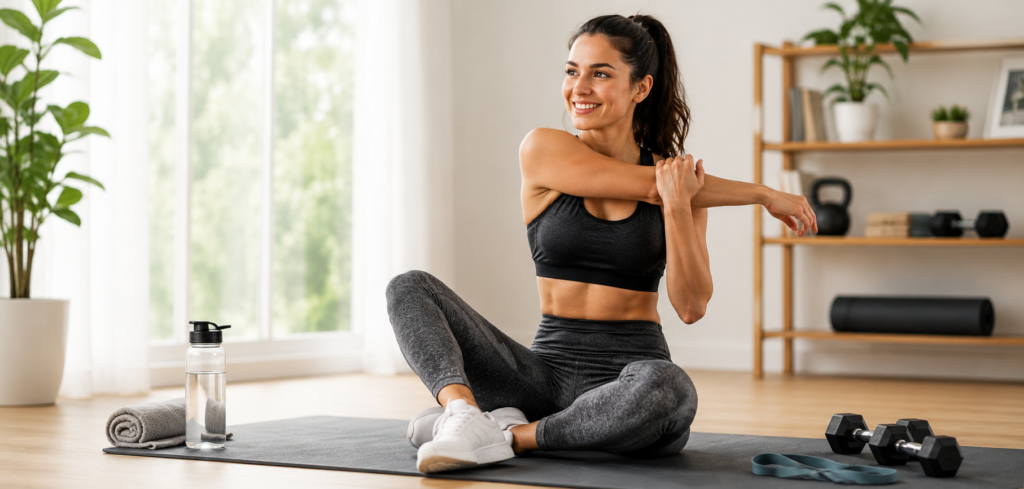
Strength exercises help build muscle and improve bone health.
Examples include:
- Dumbbell workouts
- Resistance bands
- Push-ups
- Squats
- Lunges
- Bodyweight exercises
Beginners can perform strength training two or three times per week.
Also Known:
1. Breast Health Foods: Nutrient-Rich Foods That Support Overall Breast Wellness Naturally
2. Workout and Diet Plans for Every Age: How to Stay Healthy Through the Years
3. Flexibility Exercises
Stretching improves mobility and reduces muscle stiffness.
Good flexibility exercises include:
- Yoga
- Hamstring stretches
- Shoulder stretches
- Hip mobility exercises
- Full-body stretching routines
Stretch after each workout for the best results.
4. Balance Exercises
Balance training helps prevent falls and improves stability.
Try exercises such as:
- Standing on one leg
- Heel-to-toe walking
- Tai Chi
- Stability exercises
These are especially beneficial for older adults but useful for everyone.
Tips for Beginners
If you’re new to exercise, start slowly and gradually increase intensity.
Helpful tips:
- Set realistic goals.
- Choose activities you enjoy.
- Warm up before exercising.
- Stay hydrated.
- Wear supportive shoes.
- Listen to your body.
- Rest when needed.
- Stay consistent instead of aiming for perfection.
Sample Weekly Fitness Routine
Monday: 30-minute brisk walk
Tuesday: Full-body strength workout
Wednesday: Yoga and stretching
Thursday: Cycling or jogging
Friday: Strength training
Saturday: Outdoor walk or hike
Sunday: Light stretching and recovery
Common Mistakes to Avoid
- Skipping warm-ups
- Doing too much too soon
- Ignoring recovery days
- Poor exercise form
- Inconsistent workouts
- Not drinking enough water
Staying Motivated
Building healthy habits takes time.
Ways to stay motivated include:
- Track your progress.
- Exercise with a friend.
- Celebrate small achievements.
- Try different workout styles.
- Create a weekly schedule.
- Listen to music or podcasts while exercising.
Remember that consistency matters more than intensity.
Conclusion on Exercise and Physical Fitness
Exercise is one of the best investments you can make in your long-term health. By combining aerobic activity, strength training, flexibility work, and balance exercises, you can build a fitness routine that supports both your physical and mental well-being. Start with small, manageable goals, stay consistent, and enjoy the progress you make over time.
FAQ about Exercise and Physical Fitness
How much exercise should beginners do?
Most adults should aim for at least 150 minutes of moderate aerobic exercise per week, along with strength training twice weekly.
Can I exercise at home?
Yes. Walking, bodyweight exercises, yoga, and resistance band workouts are excellent home fitness options.
What is the best exercise for weight loss?
A combination of cardio, strength training, and a balanced diet is generally the most effective approach.
Is walking enough exercise?
Yes. Regular brisk walking provides significant health benefits and is an excellent starting point for beginners.