
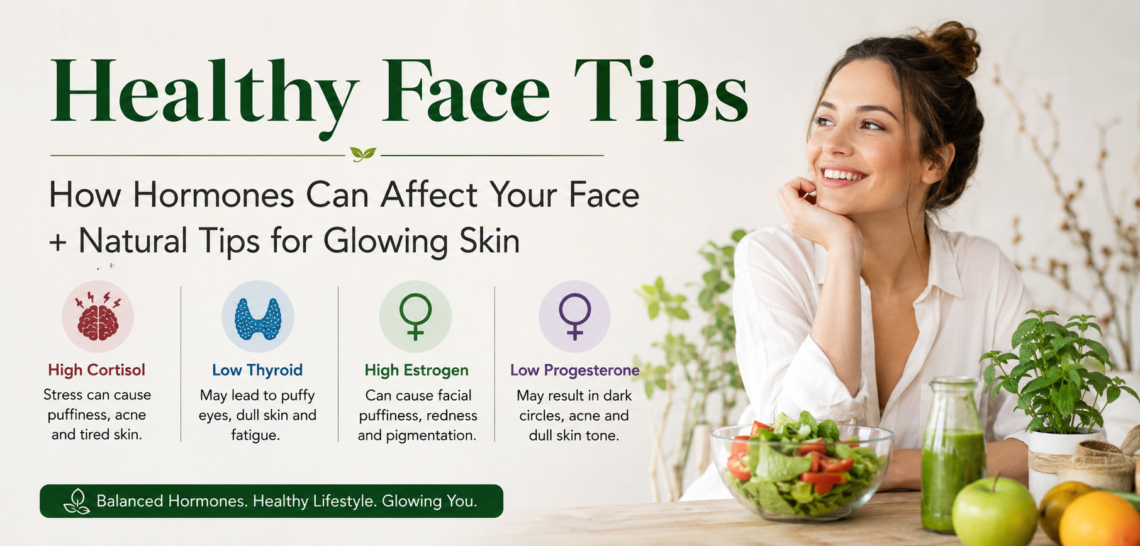
Healthy Face Tips: Everyone wants healthy, glowing skin, but your skincare routine isn’t the only thing that influences your appearance. Your hormones play a major role in how your skin looks, how much oil it produces, and whether your face appears fresh, puffy, or tired.
Hormones are chemical messengers that help control many important body functions, including metabolism, sleep, stress, reproductive health, and skin renewal. When hormone levels change, your face may also change. Some people notice puffiness, acne, dark circles, redness, or dull skin during times of hormonal imbalance.
While facial changes alone cannot diagnose a health condition, understanding these signs can help you take better care of your overall health.
This guide explains how hormones may influence your face and shares healthy face tips that support glowing skin naturally.
Why Hormones Matter for Healthy Skin
Healthy skin starts from within. Hormones regulate:
- Oil production
- Skin hydration
- Collagen production
- Blood circulation
- Skin healing
- Inflammation
- Sleep quality
When these hormones become unbalanced, your skin may reflect those changes.
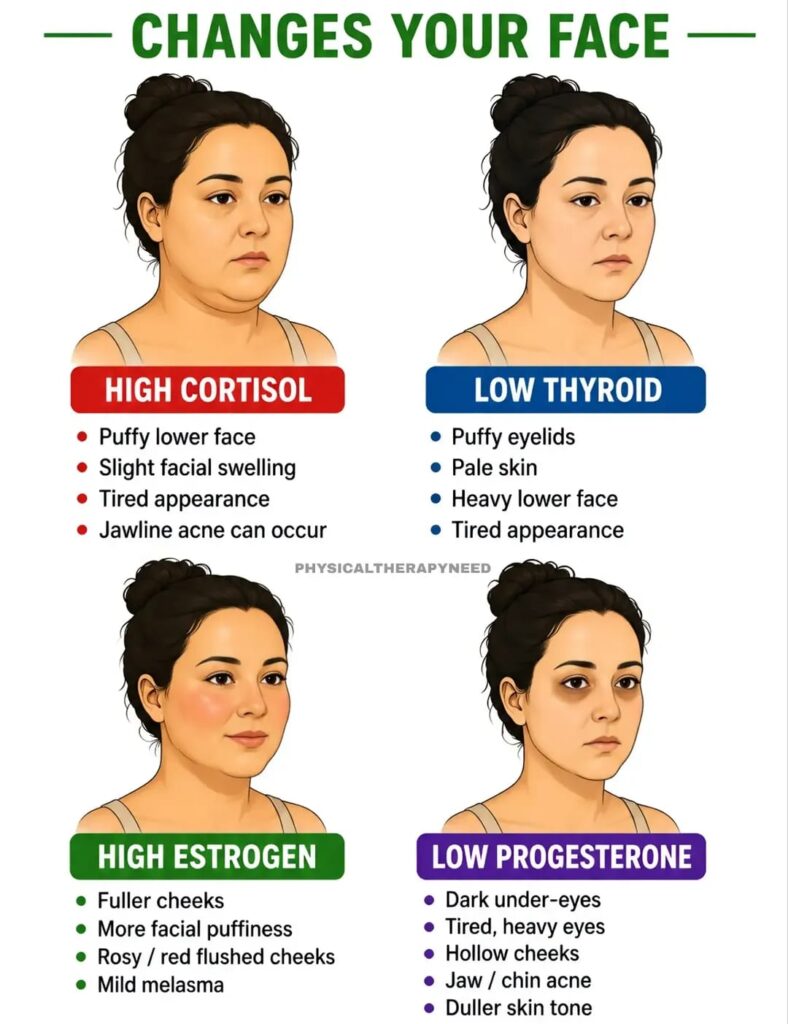
Healthy Face Tips for High Cortisol (Stress Hormone)
Cortisol is often called the body’s stress hormone. Short-term stress is normal, but ongoing stress may affect your skin and overall appearance.
Possible Facial Changes
- Puffy lower face
- Mild facial swelling
- Oily skin
- Jawline acne
- Tired appearance
Also Known:
1. Breast Health Guide for Women: Daily Care, Warning Signs, Self-Exam & Prevention Tips
2. High-Protein Breakfast Ideas for Women: Easy, Delicious Meals That Keep You Full and Energized
Healthy Face Tips
✔ Sleep 7–9 hours every night.
✔ Practice stress management through meditation, deep breathing, or yoga.
✔ Walk or exercise regularly.
✔ Eat protein-rich meals with healthy fats.
✔ Drink enough water throughout the day.
✔ Limit sugary snacks and highly processed foods.
Managing stress benefits both your skin and your overall health.
Healthy Face Tips for Low Thyroid
Your thyroid controls metabolism, energy production, and many body functions. When thyroid hormone levels are low, your skin and face may appear different.
Possible Facial Changes
- Puffy eyelids
- Dry or pale skin
- Heavy-looking lower face
- Tired expression
- Reduced skin brightness
Healthy Face Tips
✔ Eat a balanced diet rich in vitamins and minerals.
✔ Include foods containing selenium and zinc.
✔ Stay physically active.
✔ Moisturize dry skin daily.
✔ Follow your doctor’s treatment plan if diagnosed with hypothyroidism.
Never take thyroid supplements without medical advice.
Healthy Face Tips for High Estrogen
Estrogen supports healthy skin, collagen production, and skin elasticity. However, when estrogen levels become higher than normal compared with other hormones, some people may notice facial changes.
Possible Facial Changes
- Fuller cheeks
- Mild facial puffiness
- Rosy complexion
- Skin pigmentation (melasma)
Healthy Face Tips
✔ Eat plenty of colorful vegetables.
✔ Choose whole grains instead of refined carbohydrates.
✔ Maintain a healthy body weight.
✔ Exercise regularly.
✔ Reduce alcohol intake.
✔ Prioritize quality sleep.
Healthy lifestyle habits can help support hormonal balance naturally.
Healthy Face Tips for Low Progesterone
Progesterone works together with estrogen to maintain hormonal balance.
Low progesterone may contribute to certain skin concerns in some women.
Possible Facial Changes
- Dark under-eye circles
- Dull skin
- Chin or jawline acne
- Hollow-looking cheeks
- Tired eyes
Healthy Face Tips
✔ Maintain a consistent sleep schedule.
✔ Manage daily stress.
✔ Eat nutrient-dense whole foods.
✔ Stay hydrated.
✔ Avoid smoking.
✔ Consult a healthcare professional if symptoms continue.
Daily Healthy Face Tips for Naturally Glowing Skin
Whether your hormones are balanced or not, these simple habits help support healthy skin.
1. Stay Hydrated
Drink enough water throughout the day to keep your skin hydrated.
2. Eat Skin-Friendly Foods
Include:
- Fresh fruits
- Green vegetables
- Lean protein
- Nuts
- Seeds
- Healthy fats
These nutrients support collagen production and healthy skin.
3. Sleep Well
Your skin repairs itself during sleep.
Aim for 7–9 hours every night.
4. Wear Sunscreen Daily
Sun damage can worsen pigmentation and speed up skin aging.
Choose a broad-spectrum SPF 30 or higher.
5. Cleanse Gently
Wash your face twice daily using a gentle cleanser suitable for your skin type.
Avoid harsh scrubbing.
6. Stay Active
Regular exercise improves circulation and helps deliver oxygen and nutrients to your skin.
7. Reduce Stress
Stress affects both your hormones and your skin.
Simple activities like walking, reading, meditation, or spending time outdoors may help.
Can You Diagnose Hormone Problems by Looking at Your Face?
No.
Facial appearance alone cannot diagnose hormonal disorders.
Many conditions—including allergies, dehydration, aging, poor sleep, nutritional deficiencies, medications, and other health issues—can produce similar facial changes.
If you notice ongoing symptoms along with fatigue, weight changes, irregular periods, severe acne, or persistent swelling, consult a qualified healthcare professional for proper evaluation.
When Should You See a Doctor?
Schedule a medical appointment if you experience:
- Persistent facial swelling
- Severe acne
- Hair loss
- Irregular menstrual cycles
- Constant fatigue
- Rapid weight changes
- Dry skin that doesn’t improve
- Ongoing dark circles with other symptoms
Blood tests and medical evaluation are often needed to identify hormone-related conditions.
Final Thoughts
Healthy skin is about much more than expensive skincare products. Your daily habits, nutrition, sleep, stress levels, and hormones all work together to influence your appearance.
By following healthy face tips such as eating a balanced diet, staying hydrated, exercising regularly, managing stress, and getting enough sleep, you can support both your skin and your overall well-being.
Remember, changes in your face can sometimes be a sign of an underlying health condition, but they are not enough to diagnose a hormone imbalance on their own. If symptoms persist, seek advice from a healthcare professional for personalized care.
FAQ
Can hormones really change your face?
Yes. Hormones can influence oil production, skin hydration, inflammation, and facial puffiness. However, facial changes alone cannot confirm a hormone imbalance.
Which hormone causes facial puffiness?
Several factors can contribute to facial puffiness. Hormonal changes, including conditions affecting cortisol, thyroid hormones, or estrogen, may play a role in some people, but other causes are also common.
What are the best healthy face tips?
The best habits include getting enough sleep, eating a balanced diet, staying hydrated, exercising regularly, wearing sunscreen, managing stress, and following a gentle skincare routine.
Can healthy lifestyle habits improve hormone-related skin changes?
Healthy lifestyle habits can support overall hormone health and skin wellness, but some hormone disorders require medical diagnosis and treatment.
This article is written in an original, reader-friendly style suitable for an AdSense-focused health and wellness blog while avoiding unsupported medical claims.




One comment on “Healthy Face Tips: How Hormones Can Affect Your Face Naturally (A Complete Guide for Healthy, Glowing Skin)”